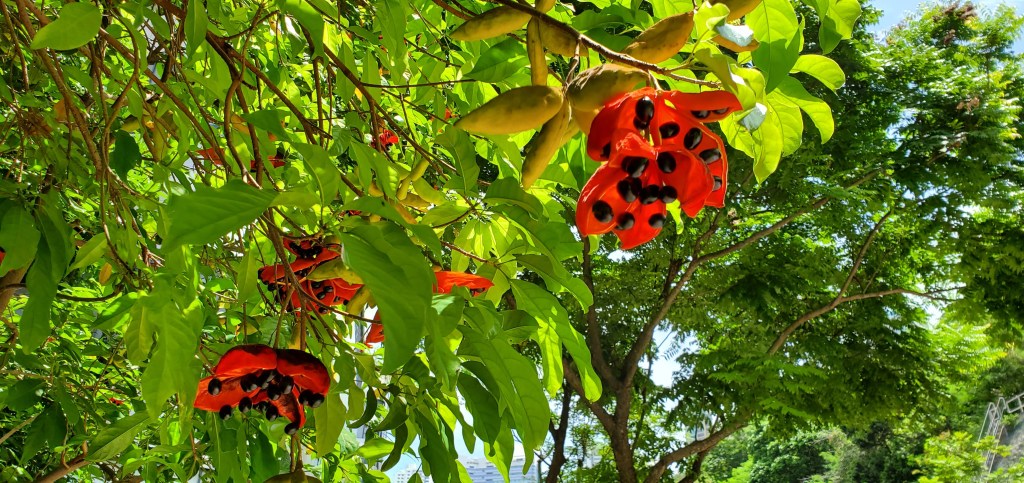
Gracing the school’s gate: Gorgeous contrast of dark seeds against fiery red petals.

Nature is often a source of inspiration for art. This year, a conscious effort was made to embed the importance of Earth’s wellbeing into Grade 3’s unit of studies in Visual Arts. Discussion with the Grade 3 Science teacher led to a focus unit on seeds and leaves and examining patterns in nature. This was followed by a second project focusing on symmetry in insects. In Science, the students studied concepts of germination, lifecycles, biomes and it was therefore deemed that these were natural an authentic extensions. The following action research was undertaken in school year 2020-2021.
Research Question: To what extent can students gain a caring attitude about the environment as a result of creating artwork about patterns in nature?
Curating a Collection of Seeds: Students curated a collection of seeds from nearby parks. Students snapped photos on their iPads and uploaded it to a class Padlet to share photos of their seeds. Unfortunately, due to social distancing, it was not possible to do an outing and students curated seed samples from Google images. Students were encouraged to find seeds with different shapes and textures to make for more interesting sketching. Words to describe texture such as bumpy, spiky, smooth, rough, fuzzy were encouraged when sharing their seed collection with the class.
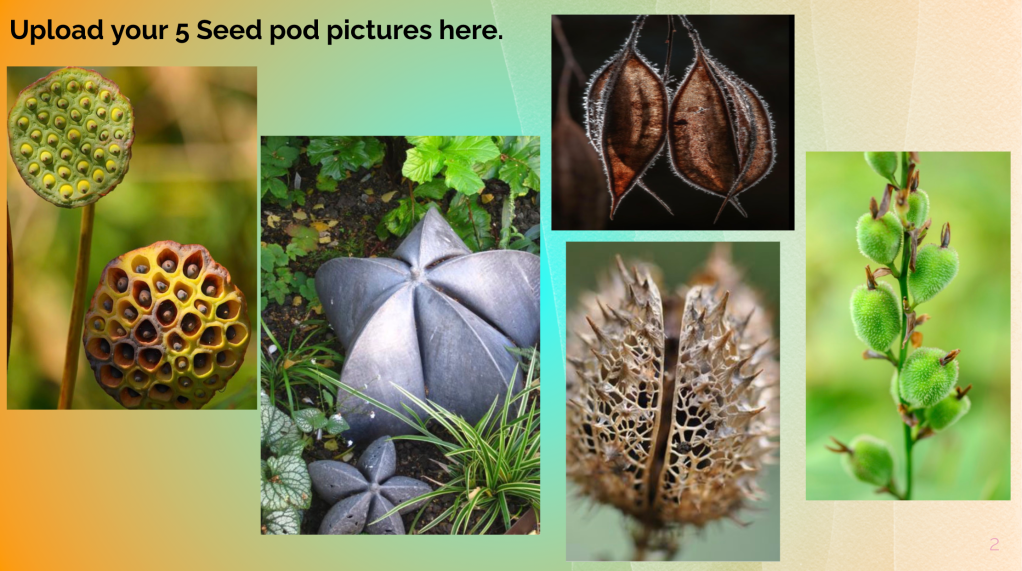

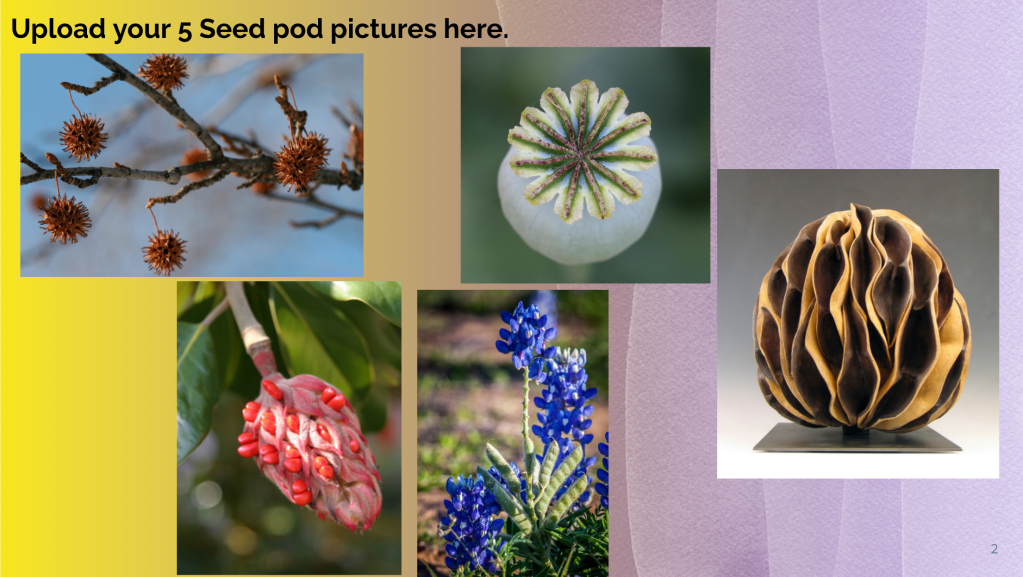
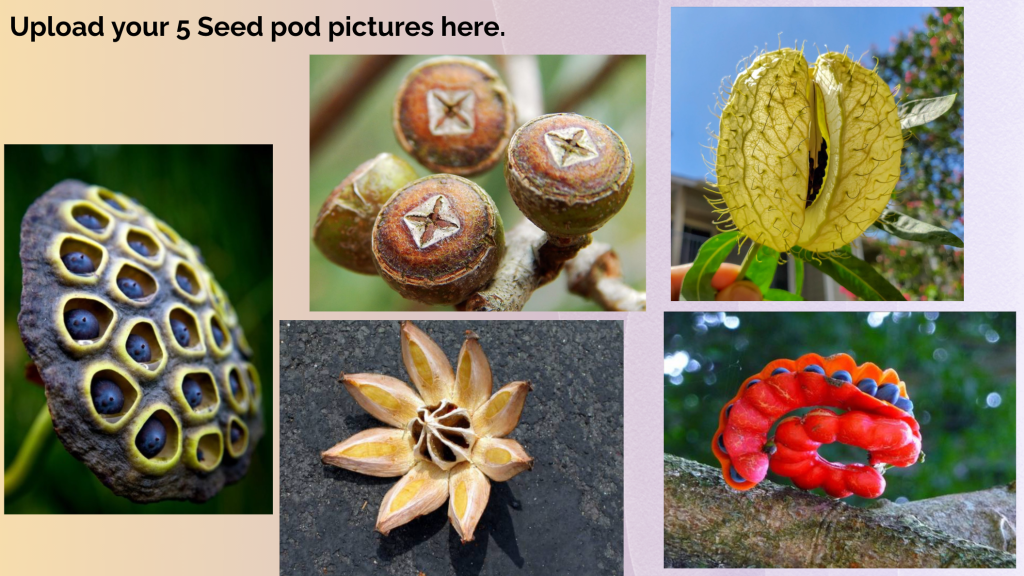
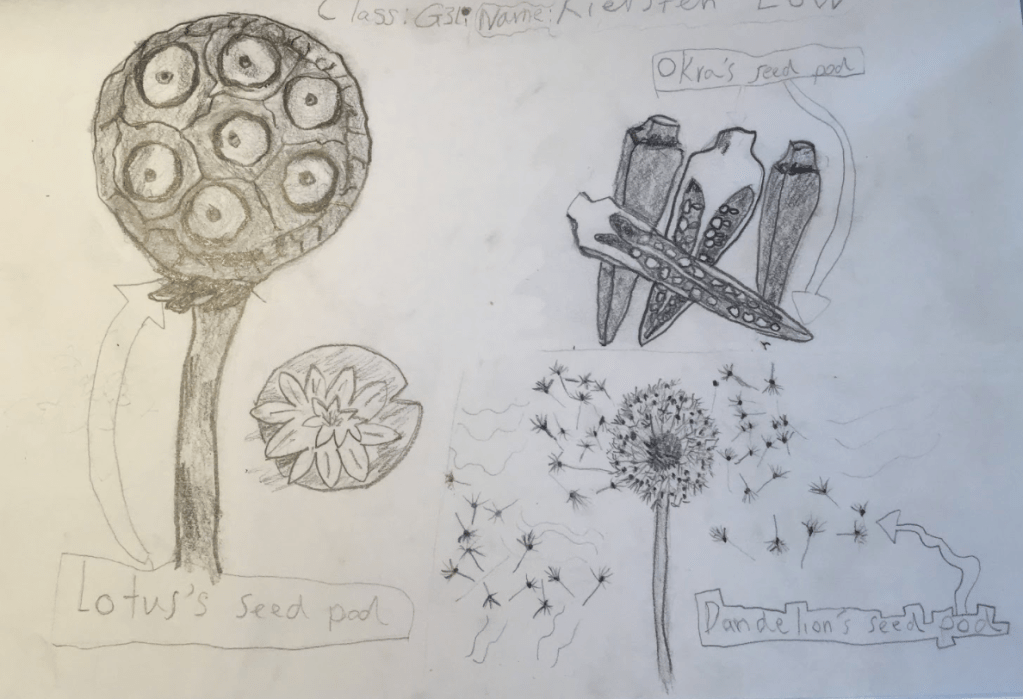
Light and Dark – Pencil sketching: Students selected 3-5 different seed pods and carefully examined it from different angles. Students ghosted (sketched) the basic shape before focusing on the details. The concept of “draw what you see and not what you know” is applied so as to encourage students to really look and appreciate what is truly there. Students also examined how light plays across the seeds.
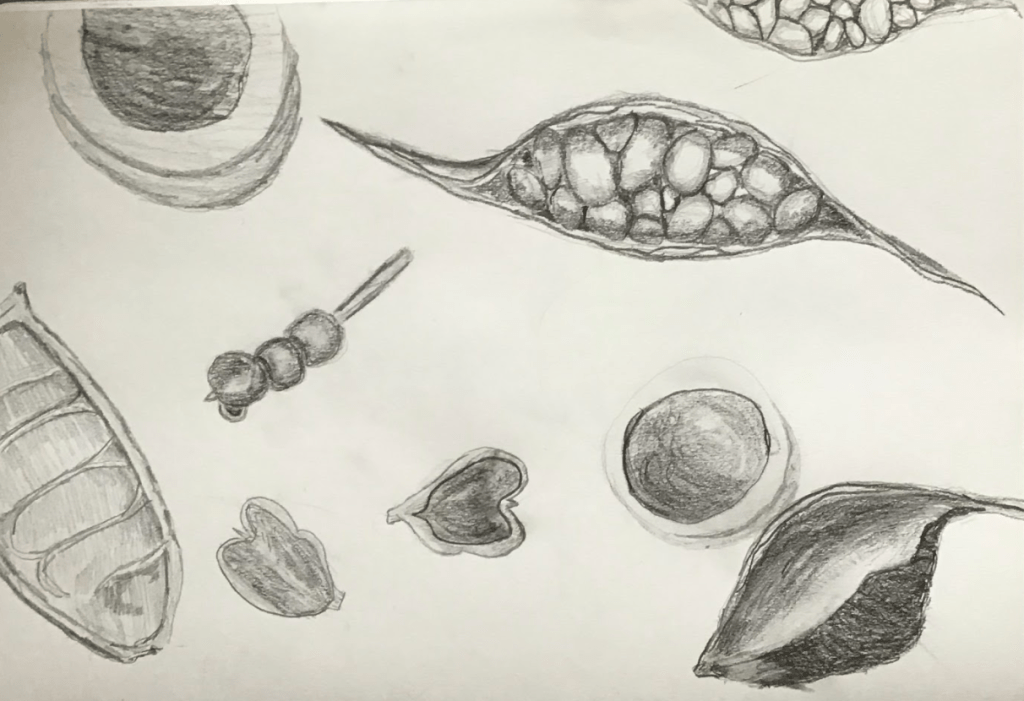
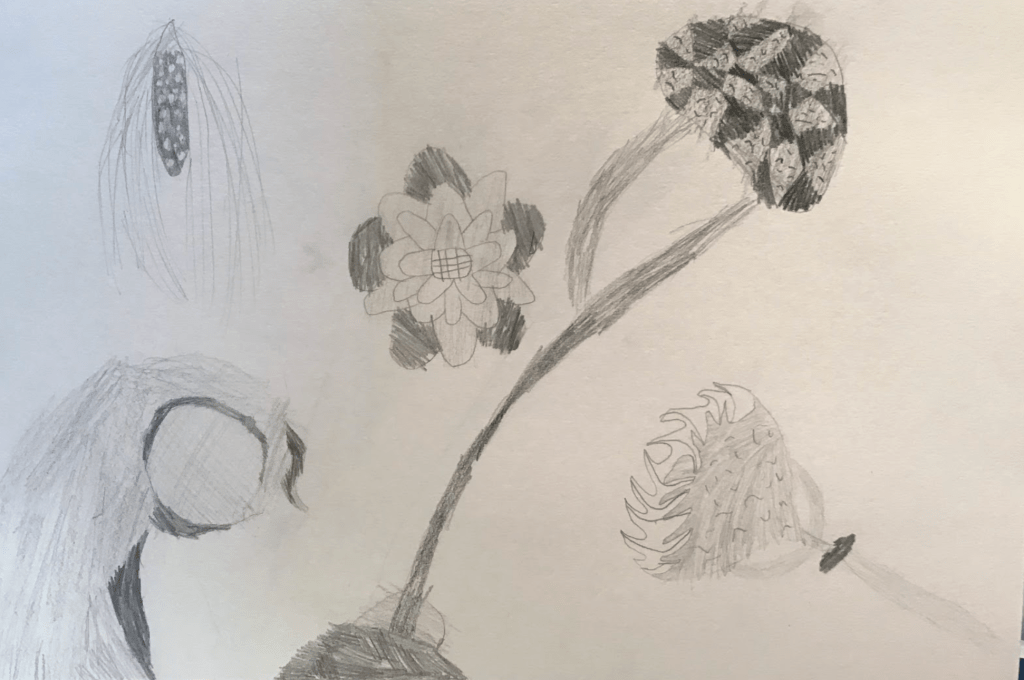
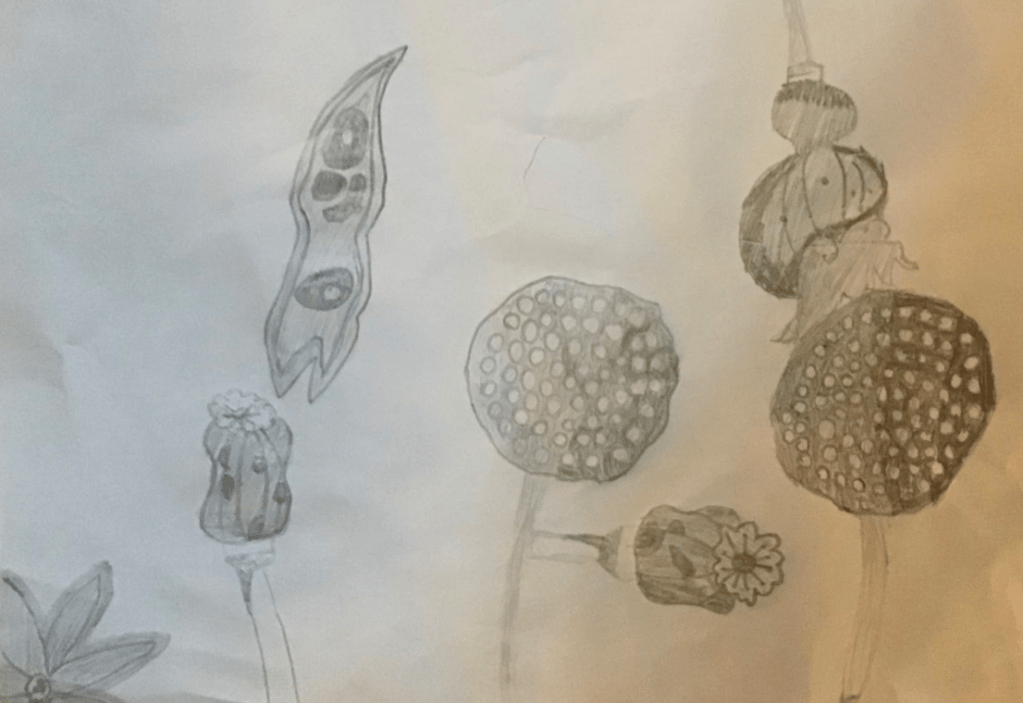
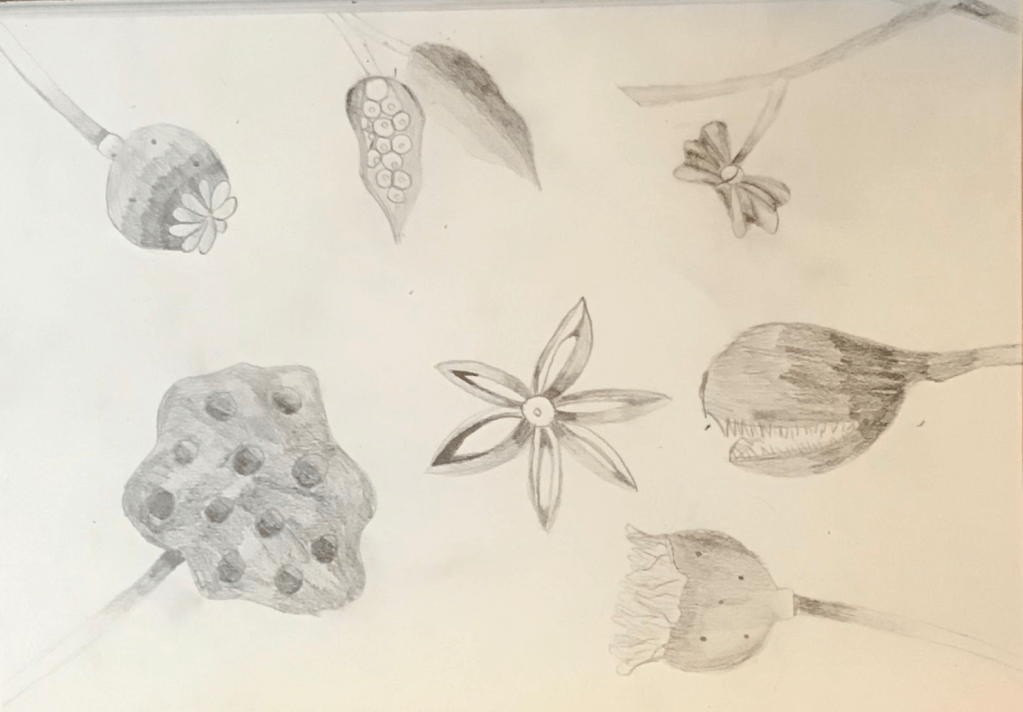

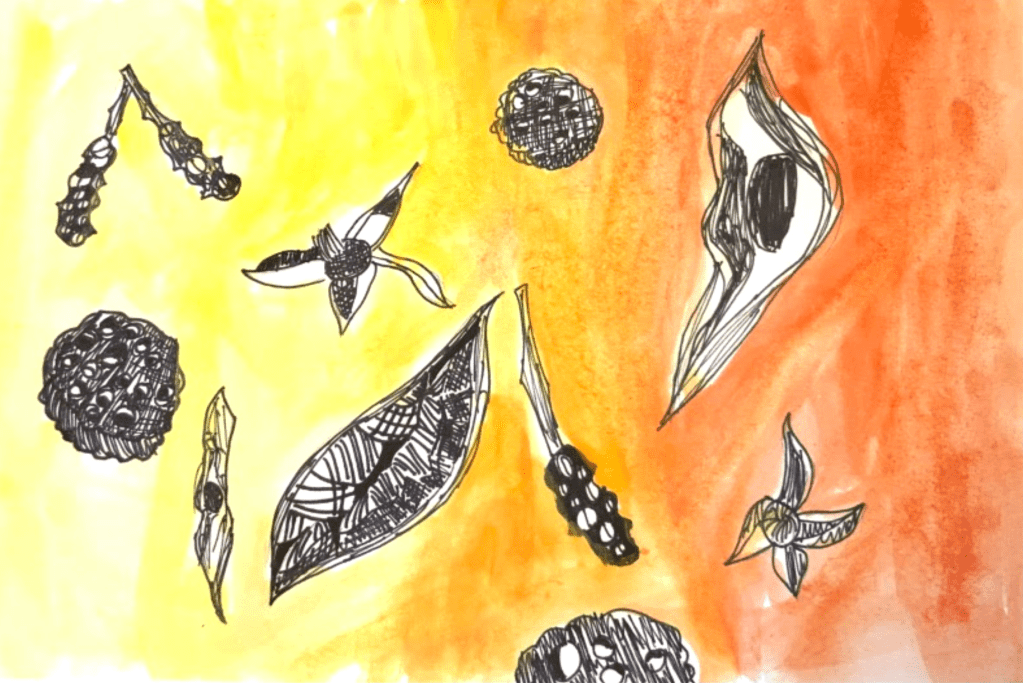
Pen and Ink Study: Students repeated a similar exercise to the one before, but this time using black ink or pen. They could select new seeds to draw or repeat the ones they used before. Once again, students were encouraged to recreate the texture and light and dark that they see. Backgrounds were painted in an analogous colour scheme.

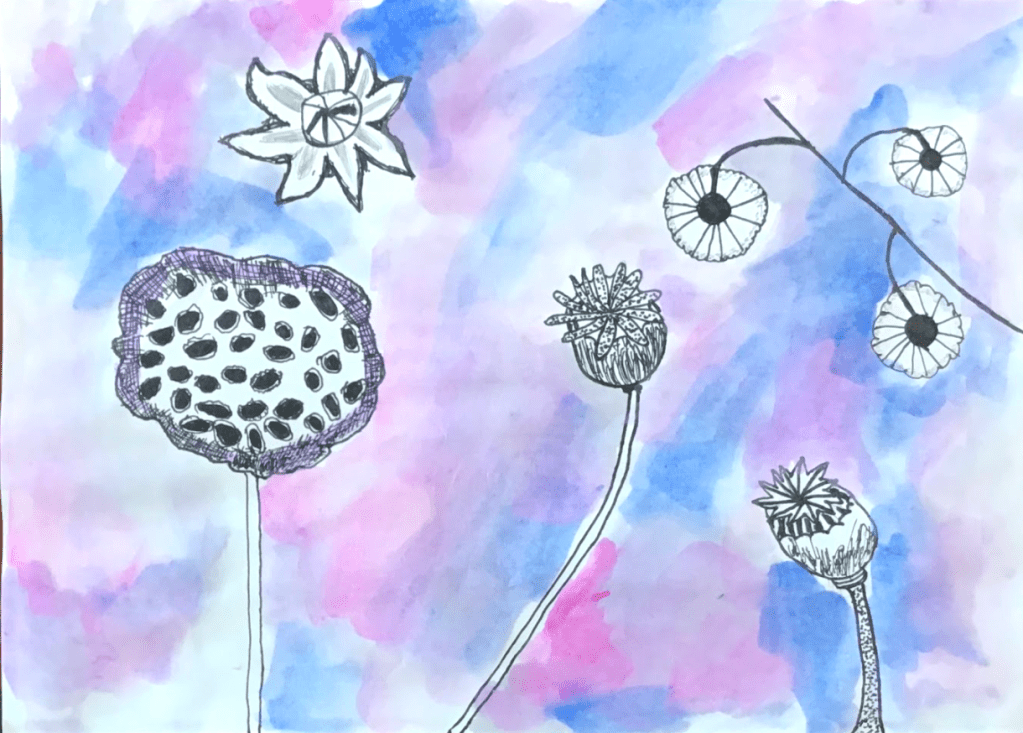


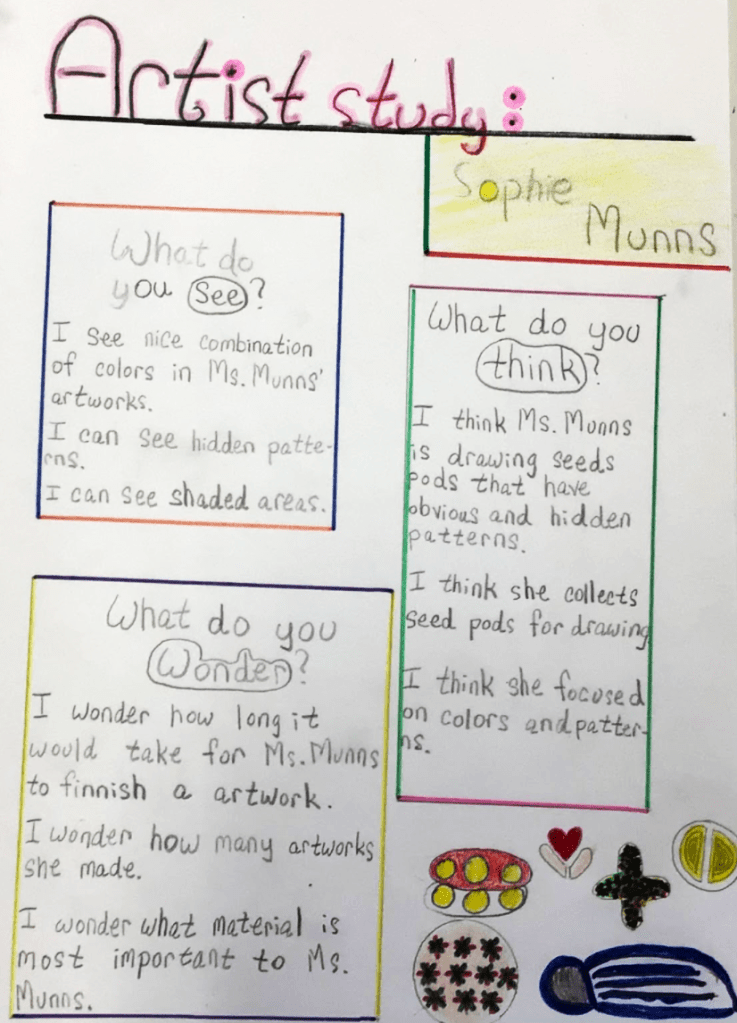
Artist Study – Ms Sophie Munns: Students were introduced to this artist. Ms. Munns is an avid seed collector with a number of related projects. Her “Homage to the Seeds” examines seed diversity, and “Seeds through and Artist’s Lens” workshops at the Plantbank, Australian Botanical Garden.
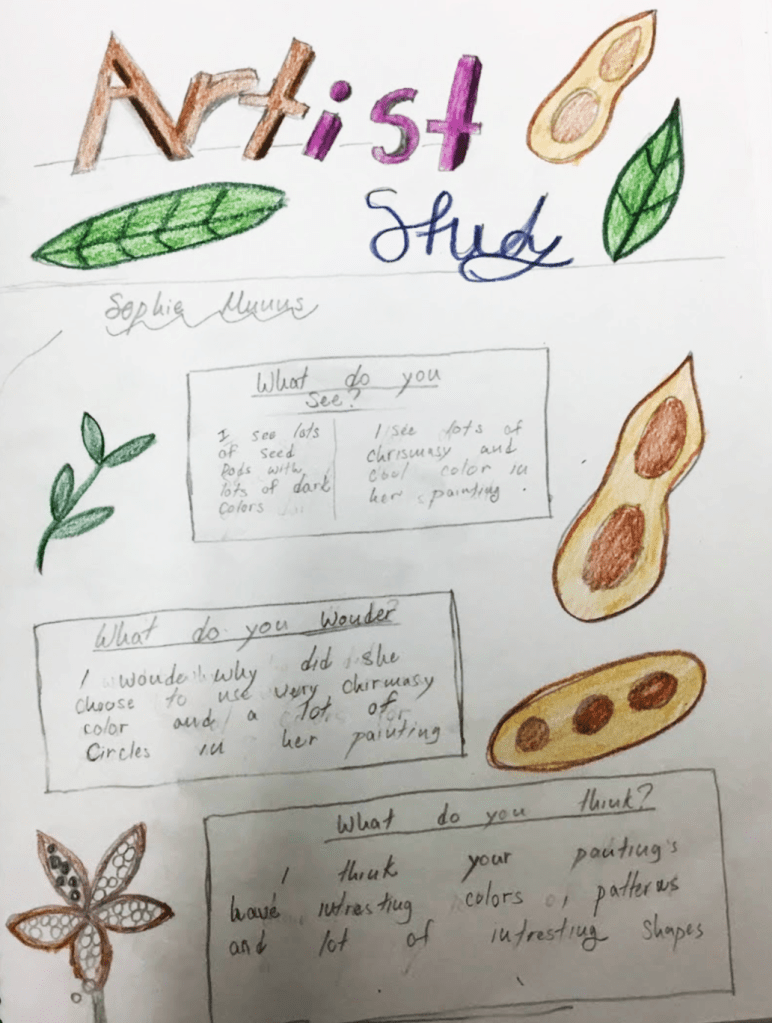
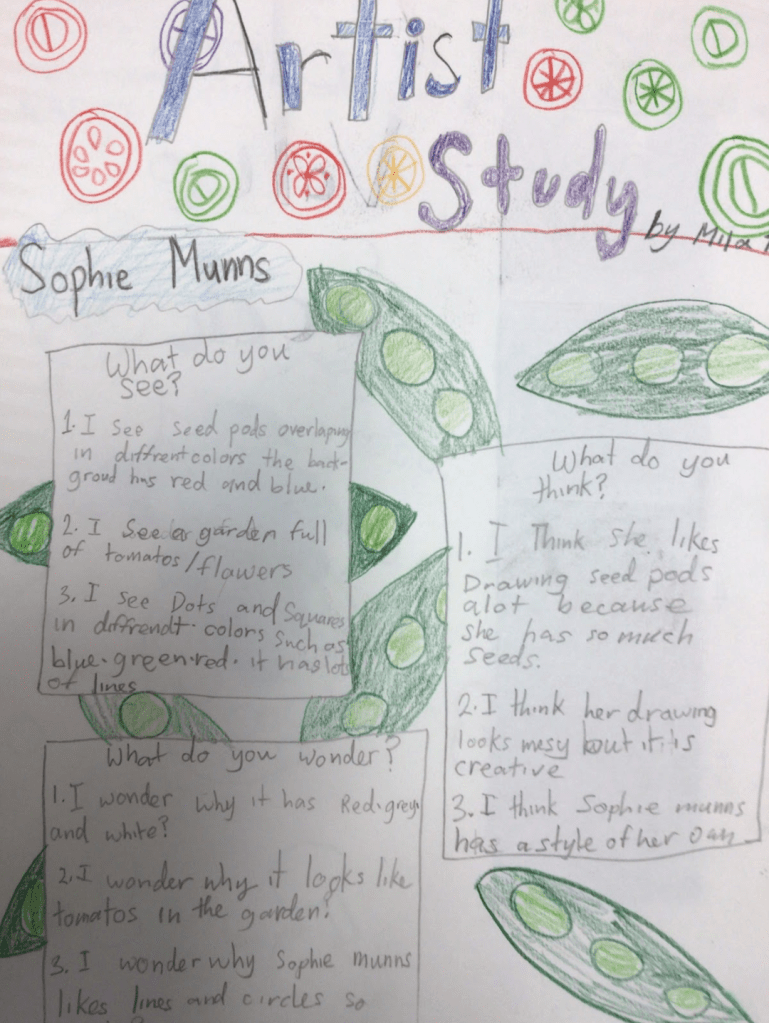

Seed Symbols – Art as a Form of Communication: A quick study comparing icons and symbols with paintings resulted in a discussion on how art is used in different ways to communicate throughout the ages. From the grand masterpieces of long gone times to the little icons on the phone, the purpose is to pass on information. We returned to Ms. Munn’s artwork and investigated how she chose to draw and paint seeds in a symbolic way to communicate their importance. A discussion on how seeds are important and their role in the life cycle ensued, pulling in as well, concepts they learned in Science. Students practiced making their own seed symbols, breaking down the shape to its simplest form.

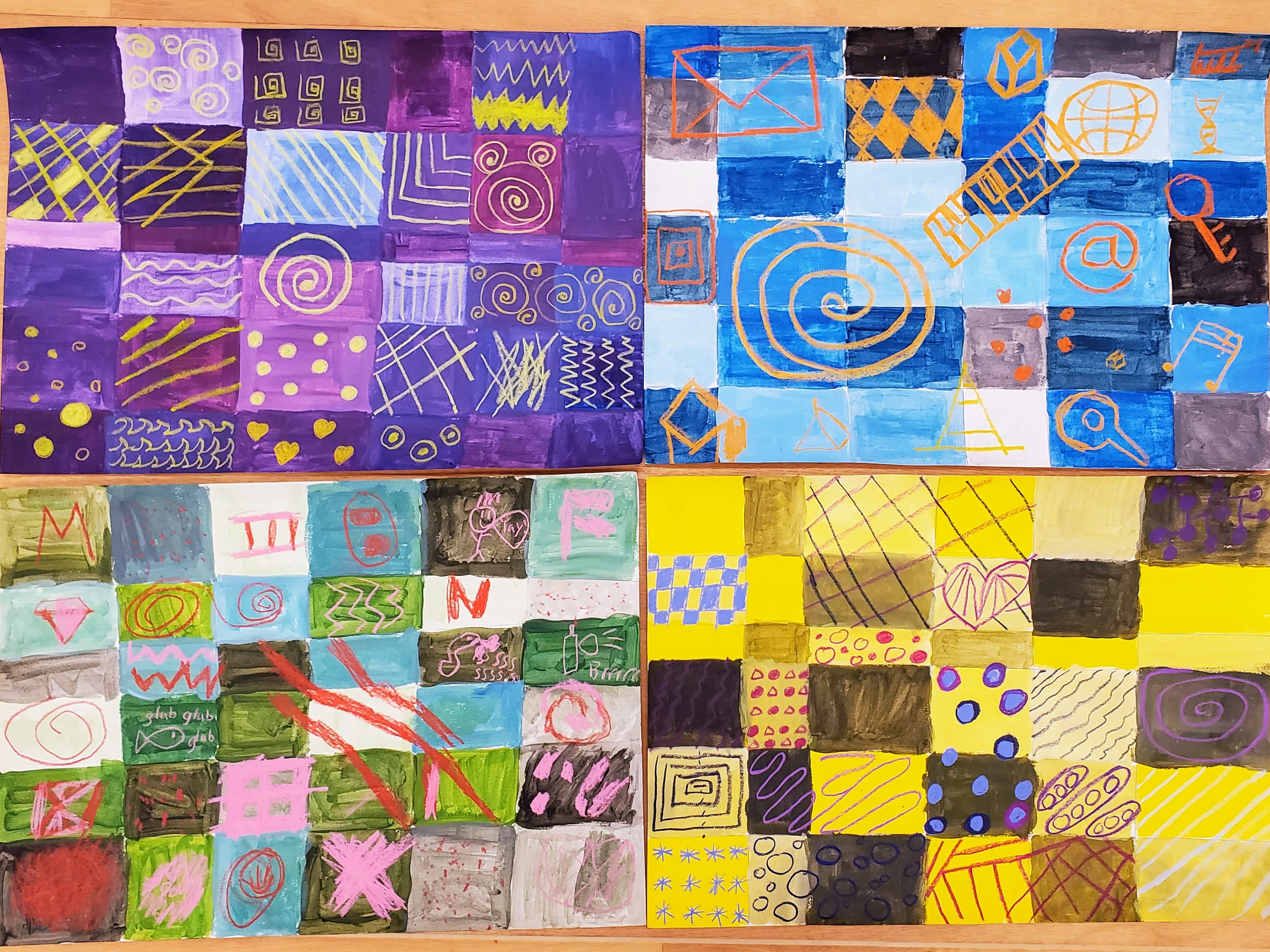
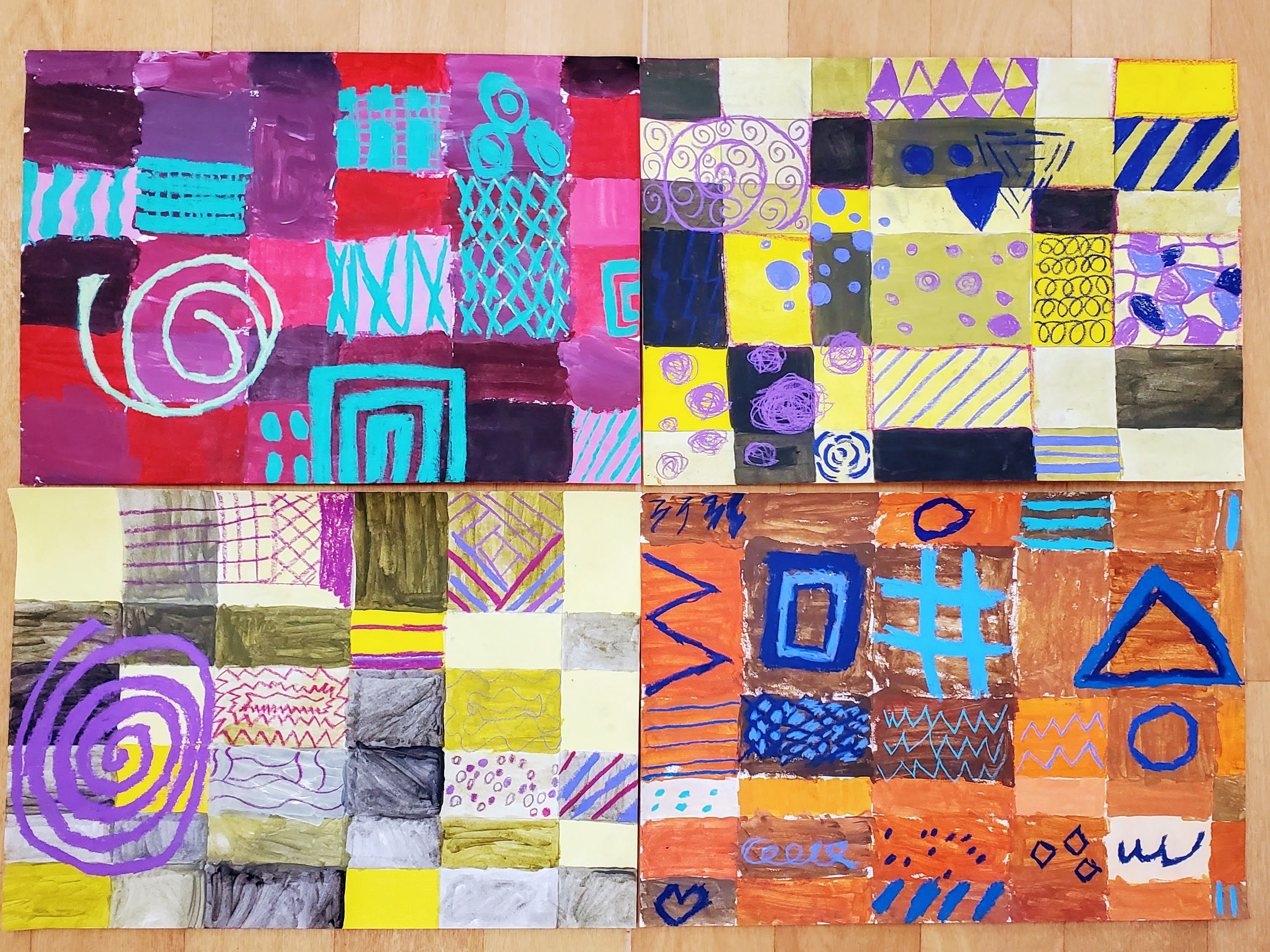
Students created a painted background using tints, tones, and shades of colour. Then, using the complementary colour in crayon, students created patterns. On top of this, they were to cut out seed symbols to paste on top. Unfortunately, as a result of school closure due to social distancing regulations, this last step has been left incomplete for the time being.
Animated Digital Poster: The final piece of work in this unit included a technical element. Students combined what they learnt about colour theory, symbols and created an animated poster promoting environmental care using the Keynotes app. A sample of their work can be found HERE
Incredible Insect Print: Following up the seed unit; we examined the symmetry and patterns found in insects. Students made connections to a math unit they had studied; and drew conclusions that with careful observations; patterns can be found nature.

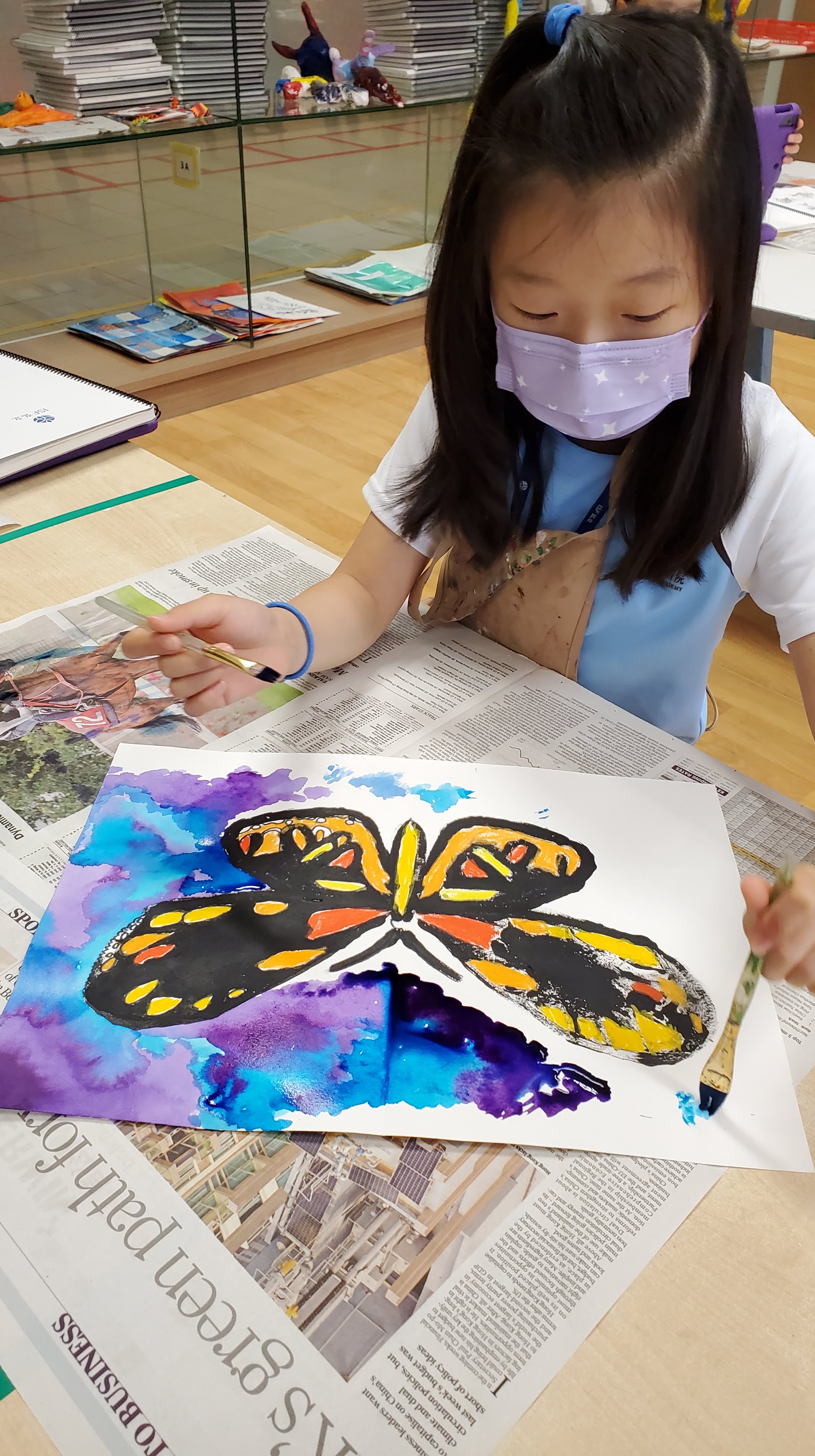
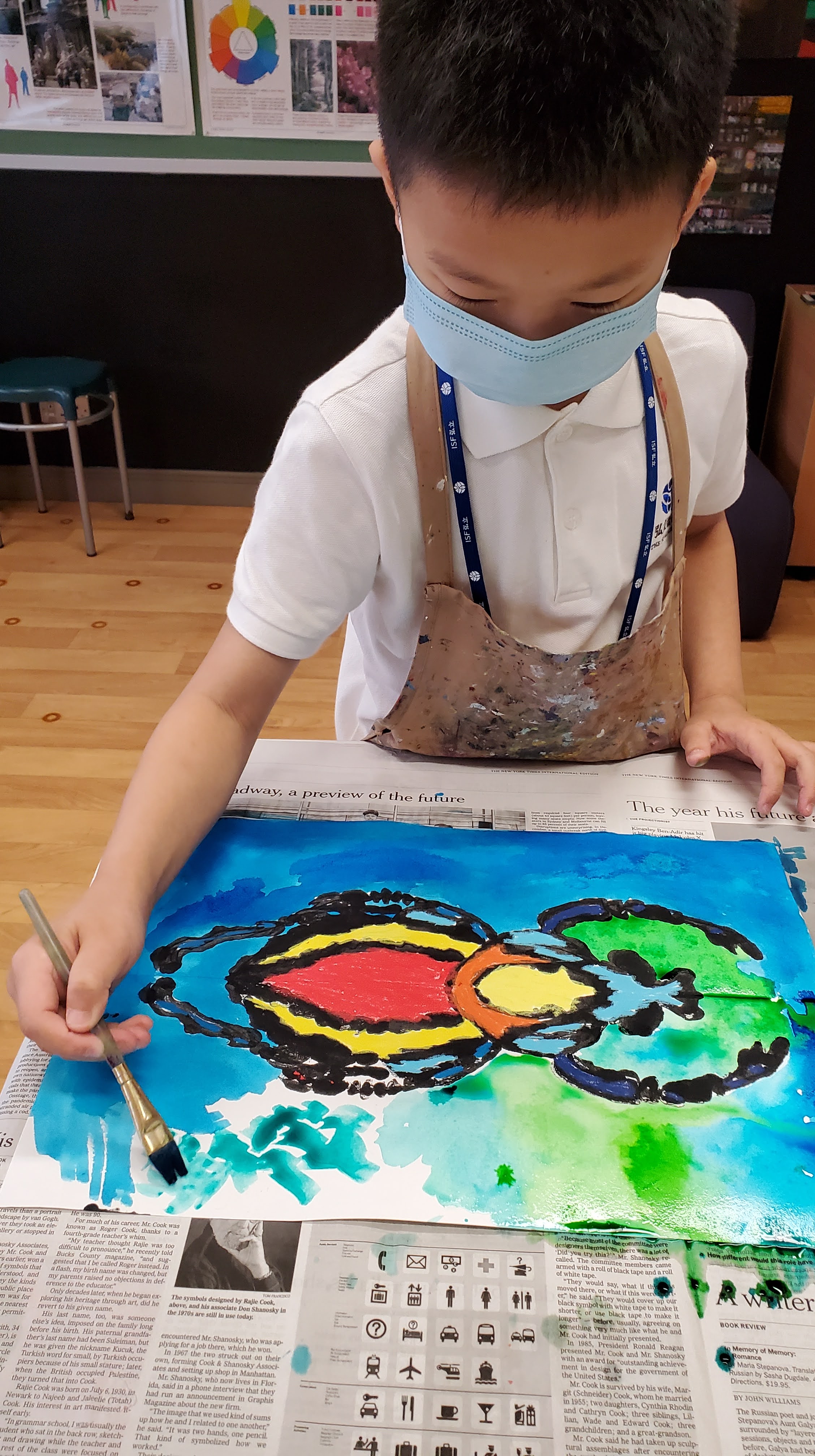
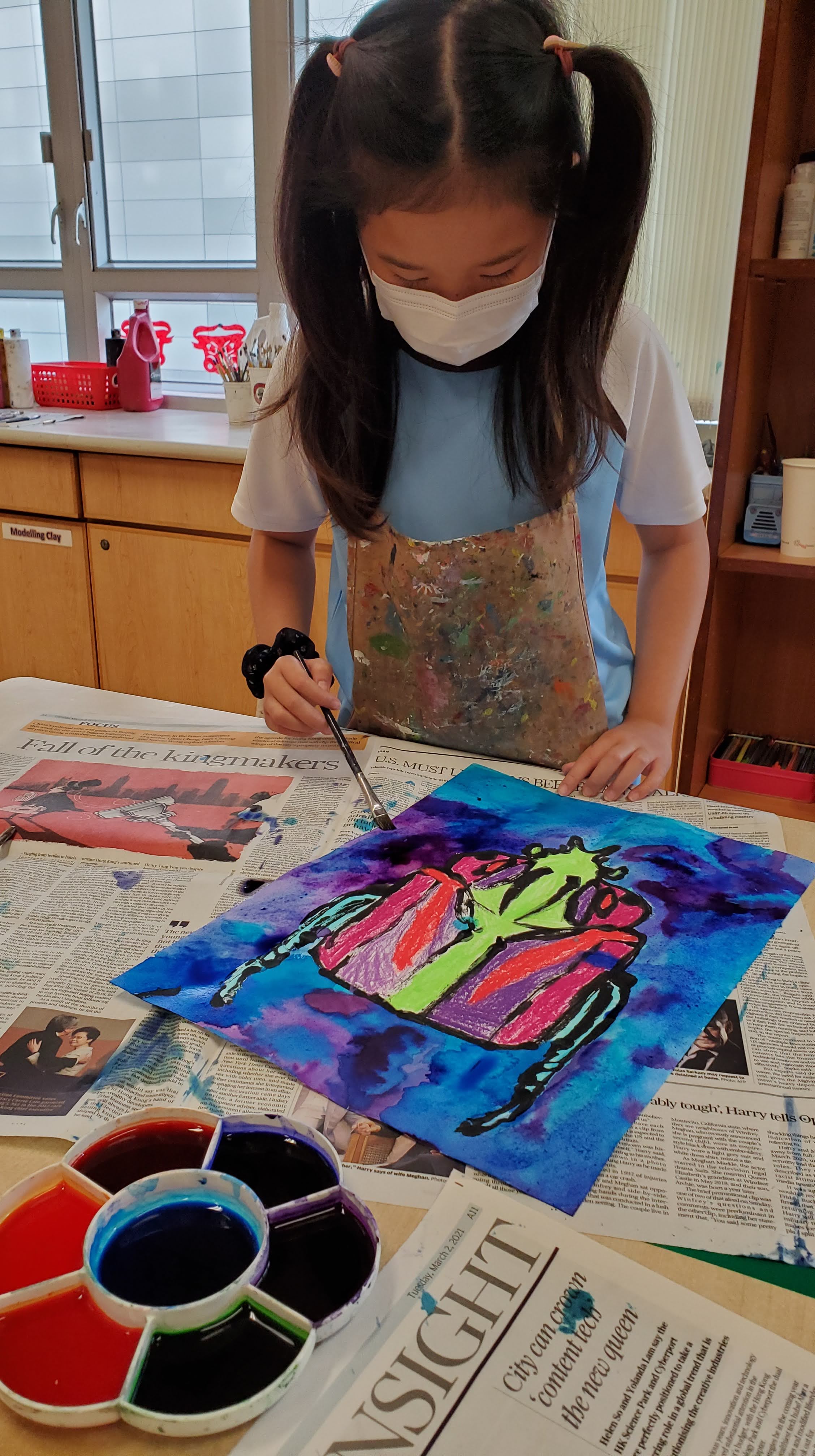
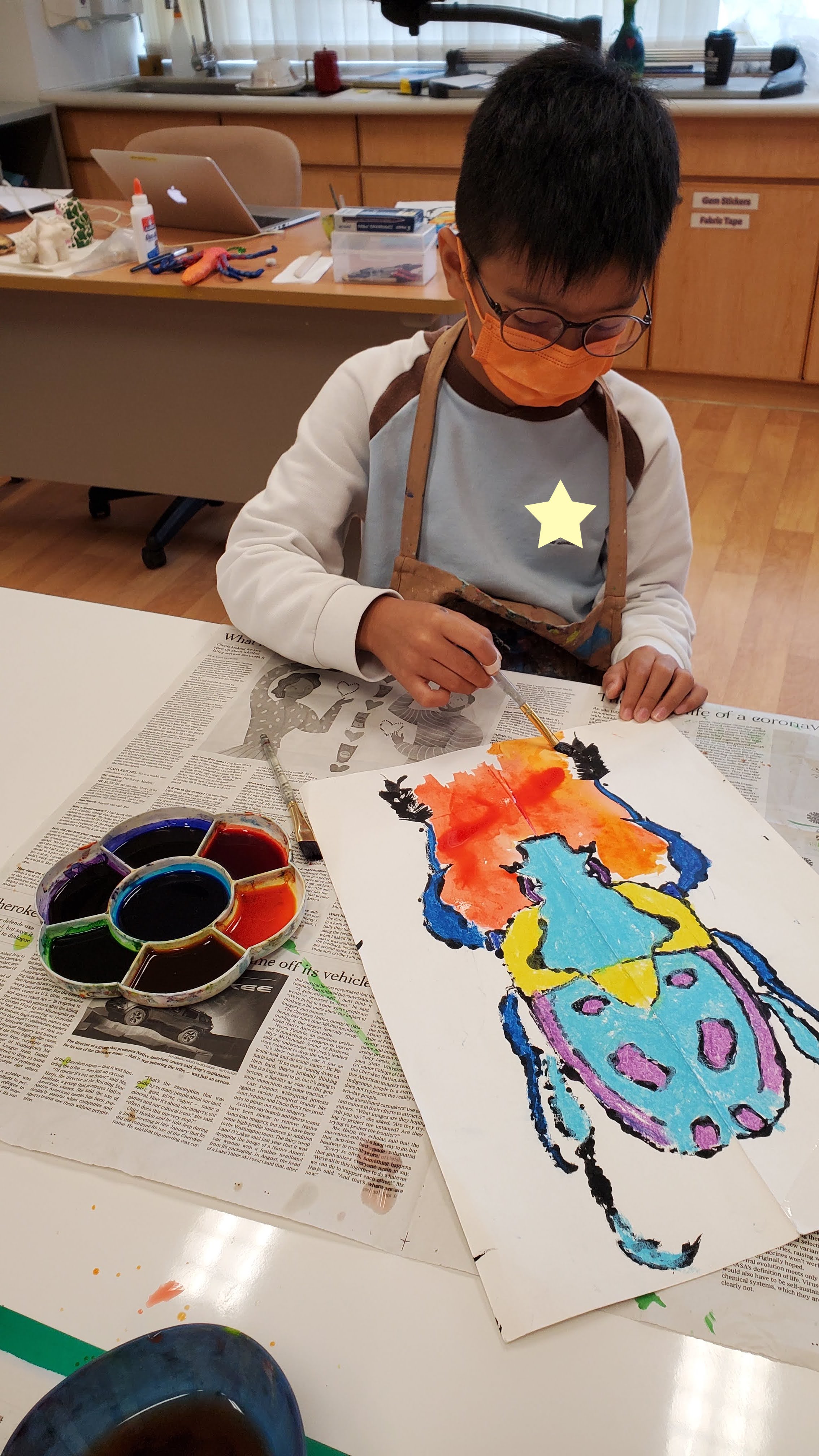
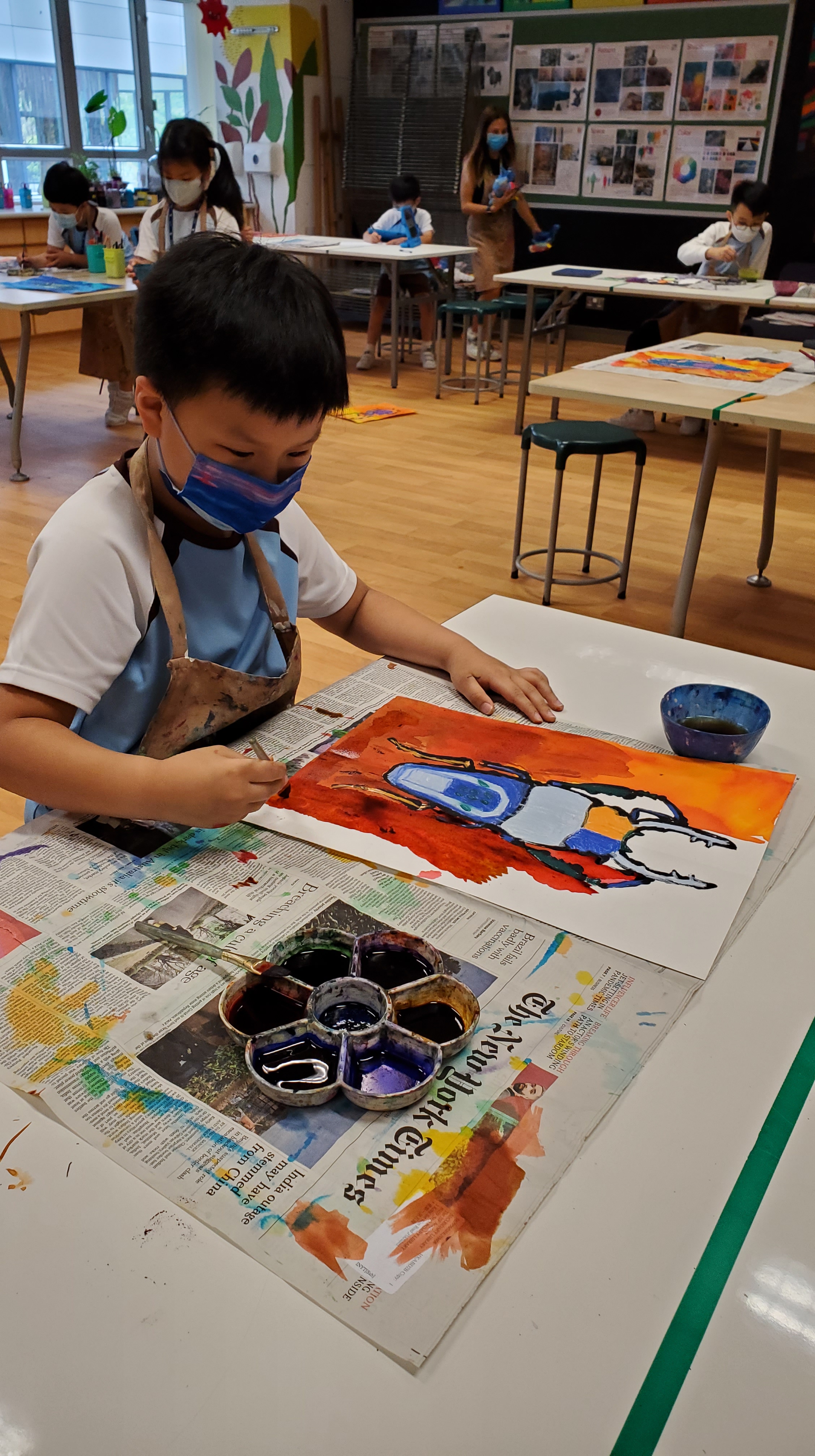
Creating the Print: Students selected an image of an interesting insect. After drawing half of the image, black ink was carefully added on top and the paper folded in half. When the student opened the paper, a symmetrical half was created, thereby creating a whole insect. Colours were added to the insect and the coloured ink finished off the background. Throughout this projects, discussions on how nature uses patterns and colours to help camouflage; as signs of warning were held.
Student Reflections: 150 students responded to survey at the end of the nature units. The findings below reflect positive connections between self and nature and between subjects (particularly with Visual Arts, Guided Discover, and Mathematics).
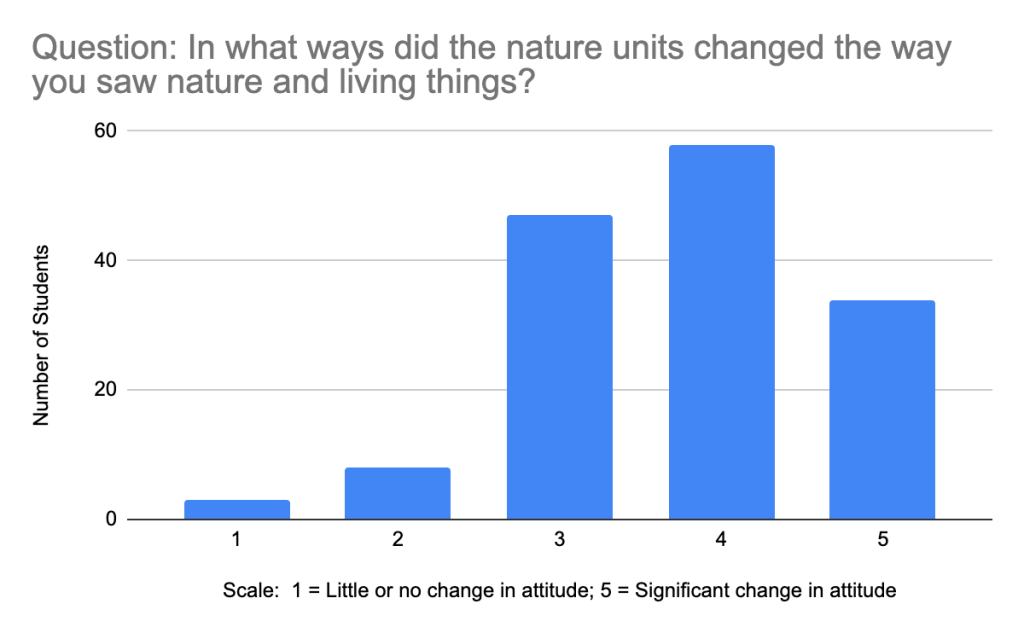
Explain how the nature units changed the way you saw nature and living things:
“This unit changes the way I saw living things. For example, I thought seeds were not important, but now I know we should take care of seeds and to step on them.”
“I used to think nature is a bit disgusting. Because it has ants, roaches, snakes and spiders. But learning about seeds and also growing them (in English GD) made me feel that they are also kind of CUTE.”
“This unit change the way I think of plants because when I did not know as much about them, I thought they were useless. But now I think they are very important in the world.”
“This unit made me feel bad for wasting so much paper everyday and harming trees. So after this unit, I will start using garbage paper and paper I used earlier so I won’t harm so many trees or waste paper.”
“The seed unit changed the way that I looked at patterns and the shapes. Because I drew seeds, it helped change the way I see things.”
Conclusion: From the survey results, 22.67% of the respondents reported that the nature units had a significant impact on the way they viewed nature; 38.67% reported to have an impact; while 31.33% reported as having some impact. Based on the gathered data, and the general positive reflections such as the above examples; it can be concluded that a caring attitude towards the environment was nurtured through the creation of nature inspired artwork, and by revisiting and reinforcing concepts of environmental care, and sustainability taught in different subjects.
 msmonica