With the school going through a uniform change; a looming question was what to do with the old uniforms. Due to the dedication of a group of passionate people, sustainable outlets were found for a large percentage of the uniforms. The materials used was one variable that had to be taken into consideration; some mills can only take cotton. At the same time, due to the placement of school logo, it was also difficult to donate to other groups for second-hand usage. Future uniform designs should consider a more cradle-to-grave approach.
Where do unwanted clothing end up? How long does it stay in the landfill? Do different fibres have different impact on the environment? If we cannot recycle the clothing, and we cannot donate them; what can we do with them? This presented teachable moment for students on natural versus synthetic materials, and concepts of sustainability.
Research Question: How does the re-use of textiles promote ideas of sustainability for Grade 3 art students?
Connections: Grade 3 Guided Discovery (science) unit ‘Materials’; Grade 3 Art unit Cultural Connections
Introduction: Students brainstormed different ways bamboo can be used, and how geography and climate can determine the materials used. Students also compared natural materials versus synthetic and how one is more sustainable than the other.
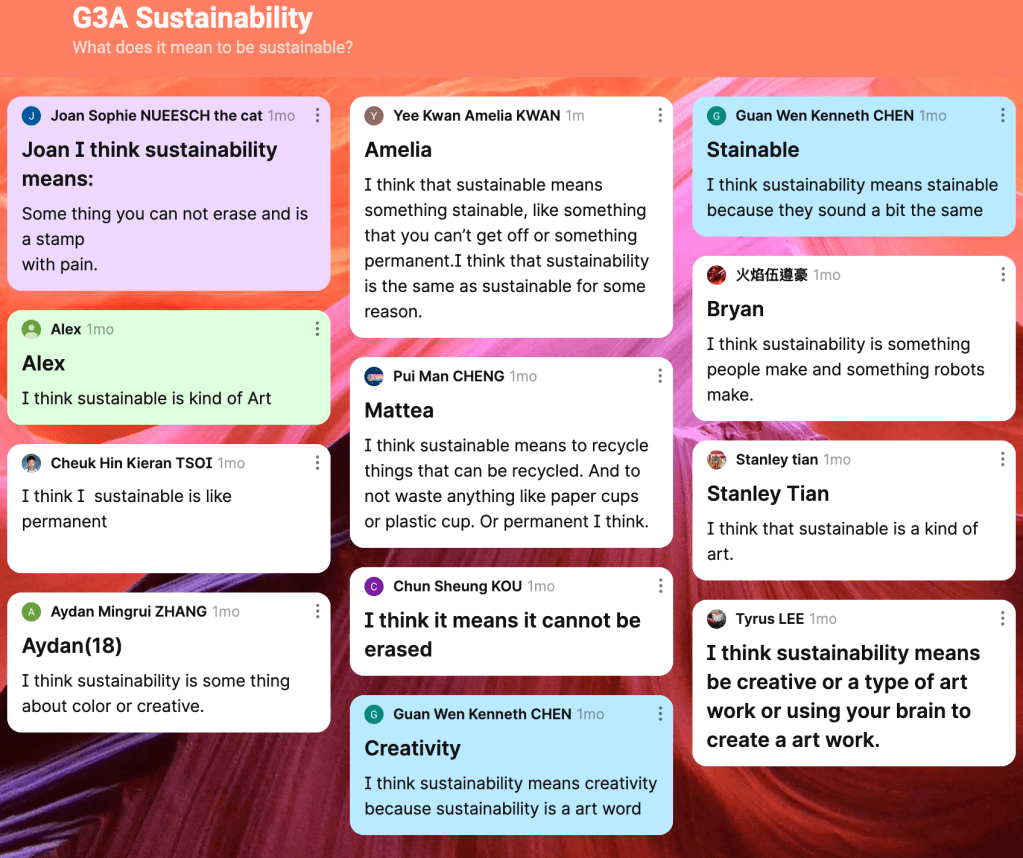
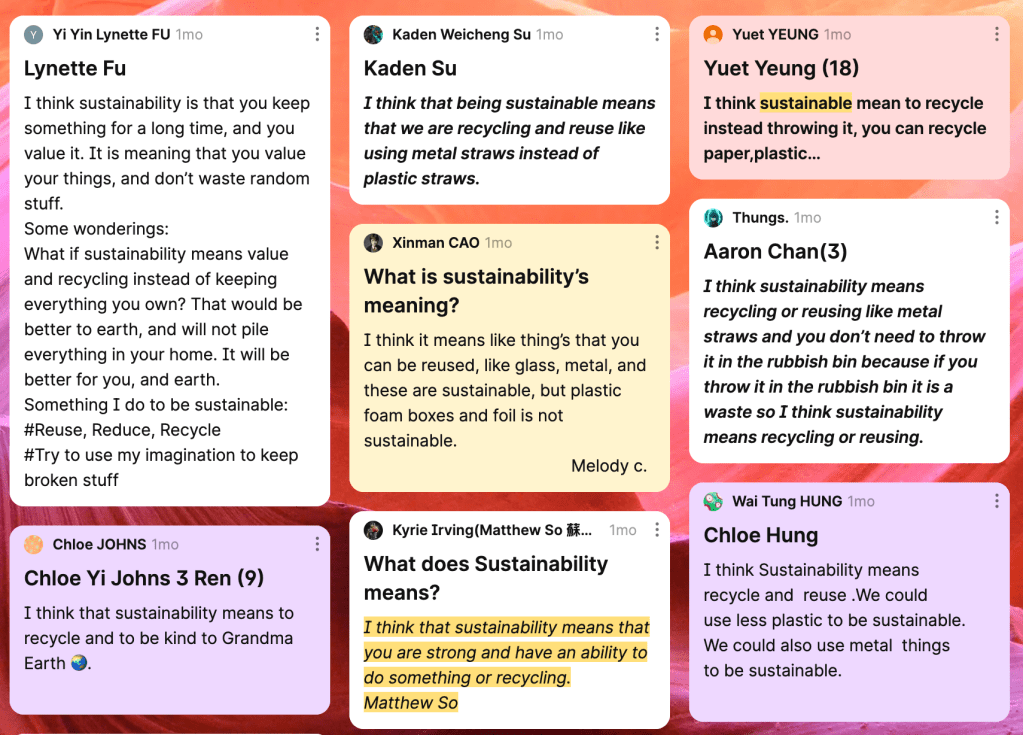
Some students started the unit with little or no understanding of the term ‘sustainable’ or ‘sustainability’. Their initial ideals were shared on a class Padlet.
Some ideas shared by students:
“I think that sustainable means something stainable, like something that you can’t get off or something permanent. I think that sustainability is the same as sustainable for some reason.”
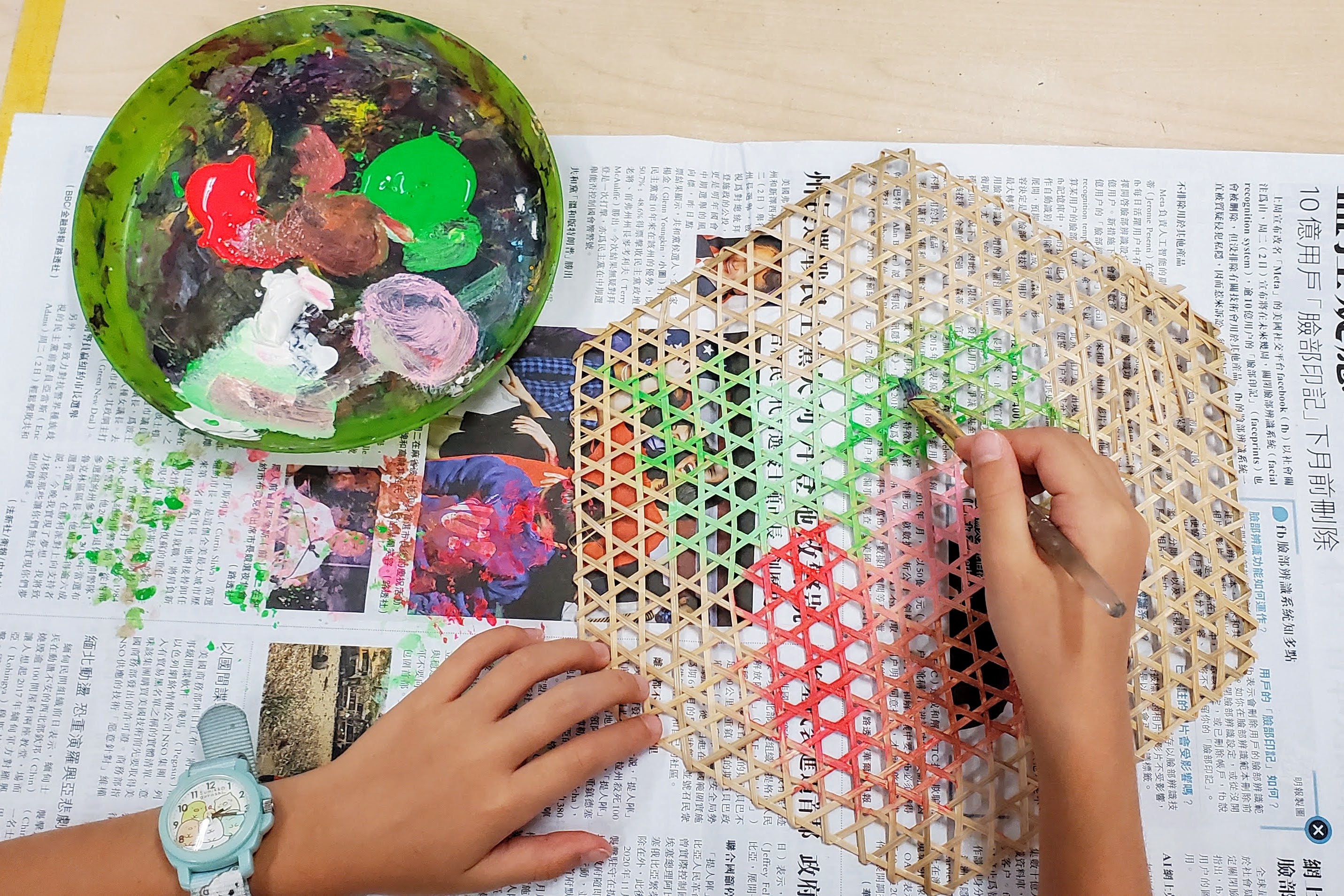
2. Old school uniforms were brought out and students experimented with different ways to attach the material to the bamboo mat.
3. Students learned different techniques to attach the fabric to the mat. These included wrapping, weaving, knotting, and tying. Students were encouraged to bring their own reusable fabric scraps to incorporate into their art.
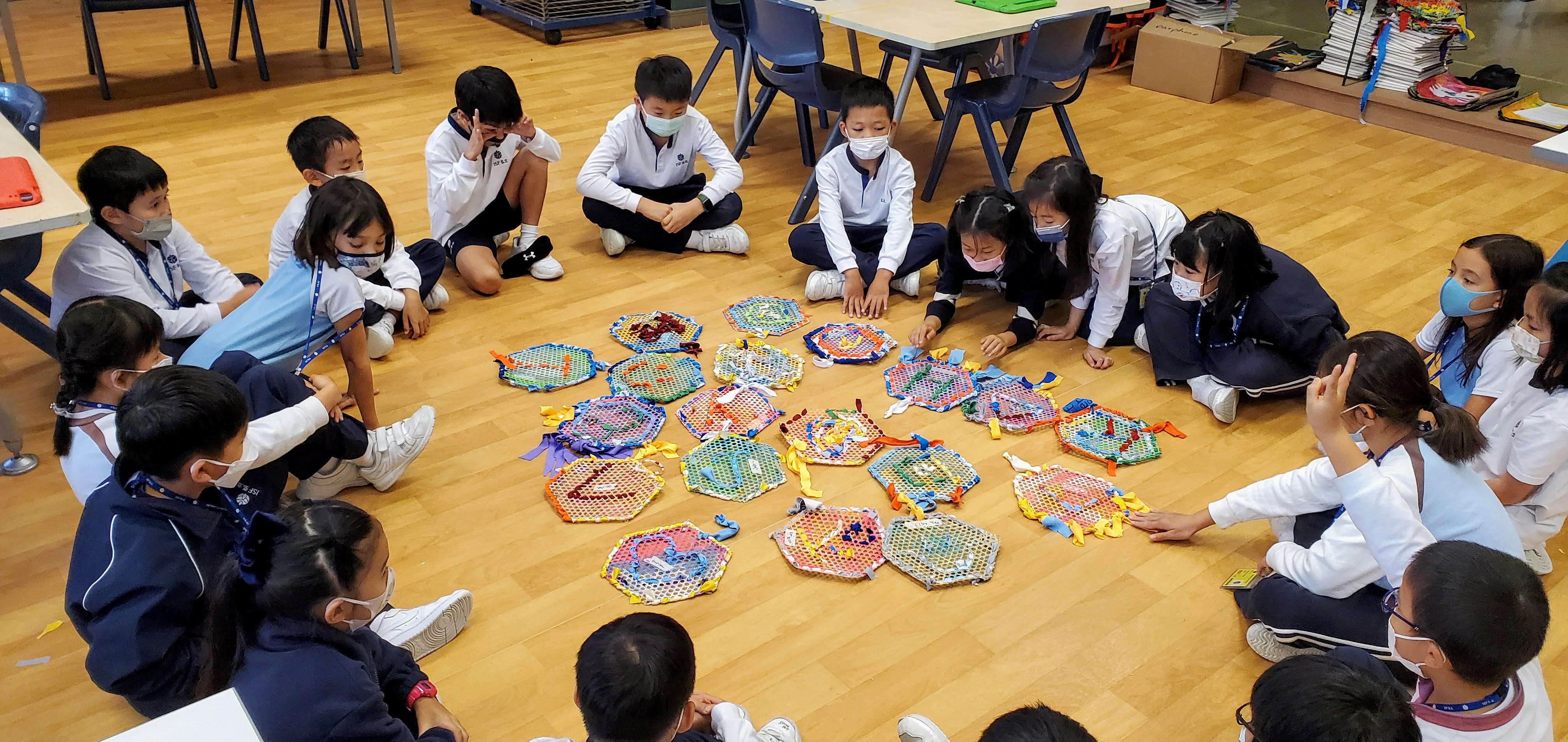


At the completion of the project, students reflected on their learning. They revisited their initial thoughts recorded on the Padlet and wrote on how their initial ideas have changed or further developed.


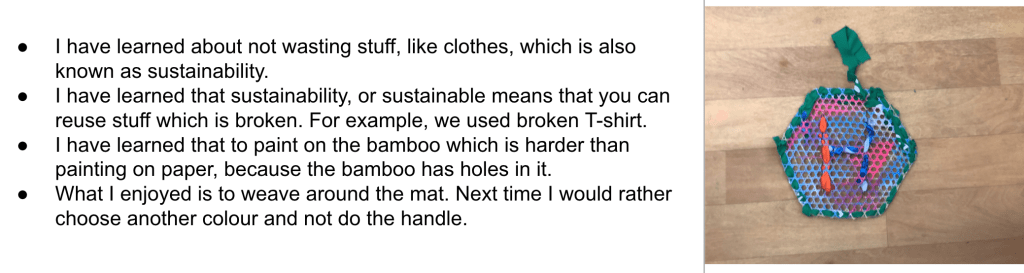
Personal Reflections
Each lesson opened with a 10 – 15 minutes groups discussion with probing questions; Why is bamboo part of the Asian culture and not others? Where do unwanted materials go?
It was amusing that a number of students believed pandas were the reason for bamboo being native in this part of the world. It led to a discussion of how common materials in one place differs from others due to the surrounding natural resources. This presents opportunities for further investigations into habitat and biomes in science.
Unfortunately, the fabric frayed considerably making it difficult to use. This brought about a conversation on how even with good intentions, recycling may not be easy for some materials and how cost/benefits affects recycling efforts. The class concluded that reducing and buying less would be the better the way.
Other Sustainability Projects
Students also took part in the following school events in the school year 2021 to 2022:
| School event: | Related concepts: | Data: |
| The Annual Spring Food Drive | food waste, hunger, equality | 35 cartons donated local food bank |
| Moon Cake Donation | food waste, packaging waste | 78kg donated to senior care homes |
| Tetra Pak Recycling Campaign | drink carton recycling | 121kg recycled since March 2021 |
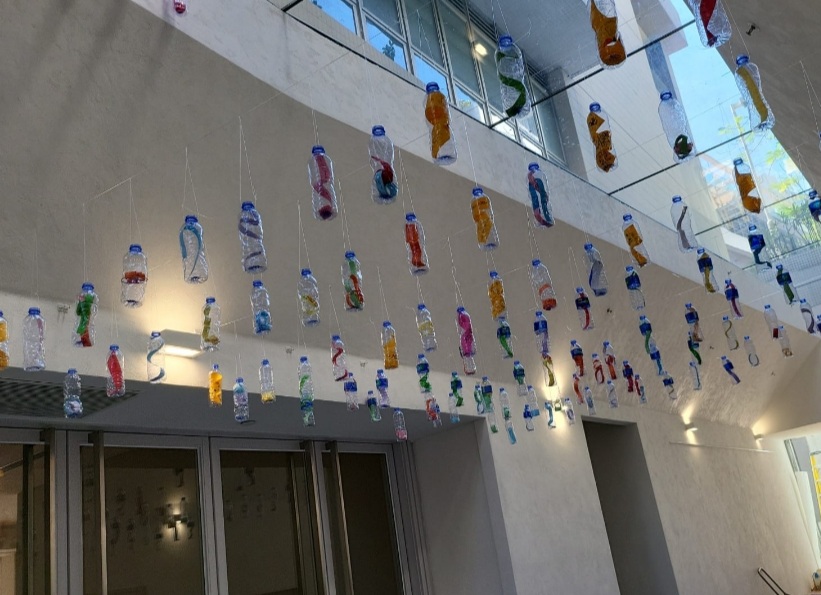
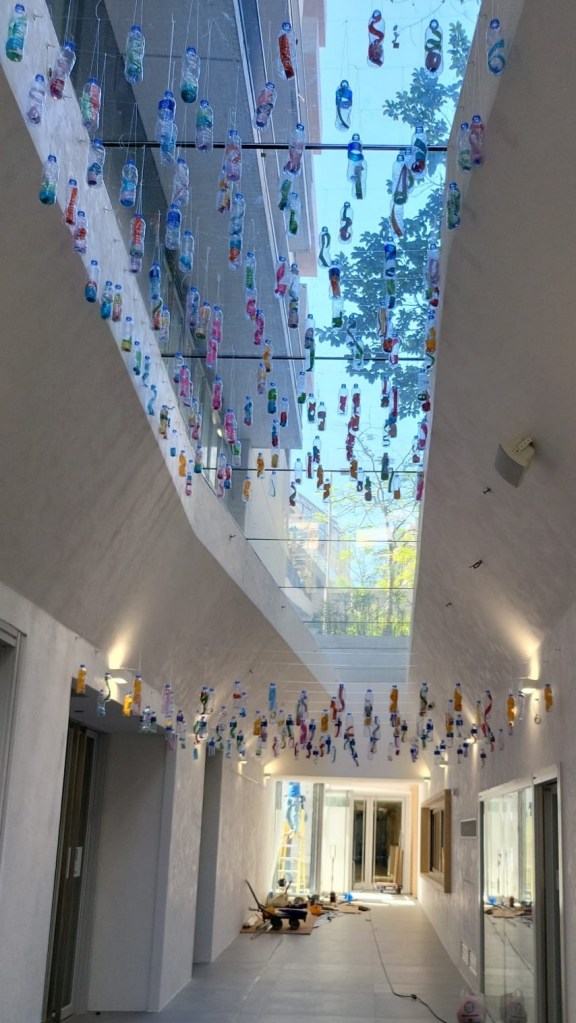
| Bottle Art Installation | sustainability and plastic waste awareness | KG – G5 invited to participate (Approx. 300 message-in-a-bottles made and hung) |
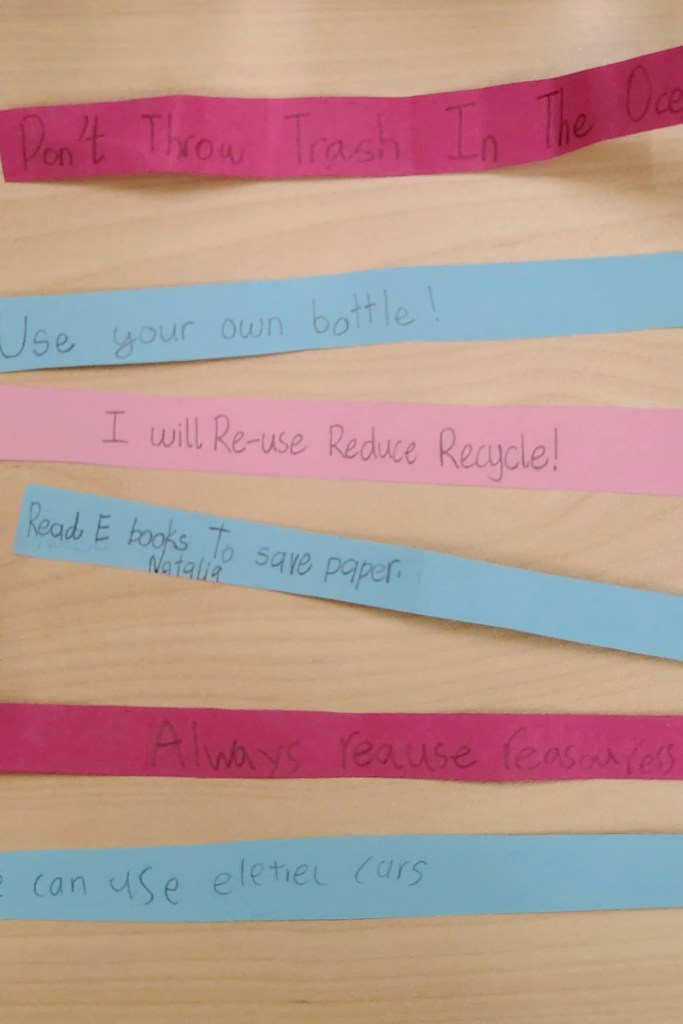
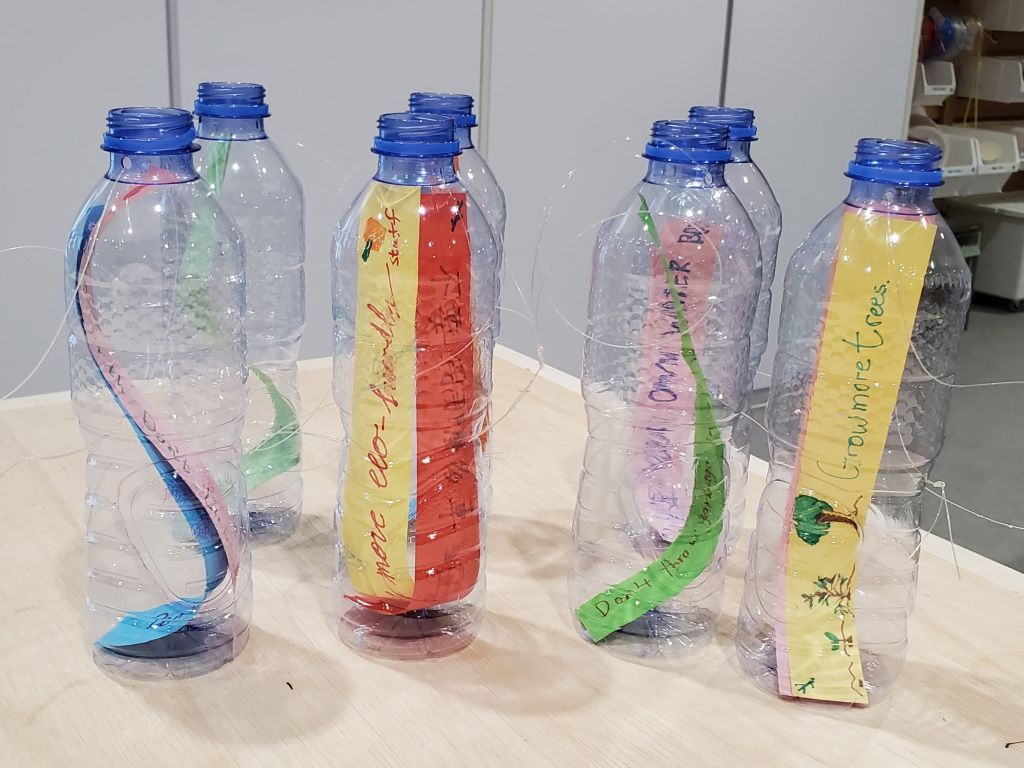
The Bottle Art Installation was a new initiative this year. As a result of the pandemic, a school event was cancelled and the cases of water ordered for the event had expired. The water was used to water the school’s rooftop garden and the bottles were used in a message-in-a-bottle activity. There were many possible lead-ins to this activity such as discussions and/or lessons centred around plastic waste, carbon footprint, sustainable development etc. Students were then asked to reflect on the health of the planet. They wrote a wish or hope for the planet and an action or goal they have to help reduce their own carbon footprint. These slips of papers were placed inside the bottles and the bottles were strung up.

 msmonica